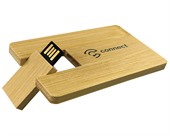
Branded Type C USB Drives
Type C USB drives have become the standard for anyone who no longer carries a USB-A cable — and handing someone a drive they can actually plug in without digging for an adaptor is a small detail that lands well. The range here covers a variety of body styles and materials: metal swivel and sliding formats, slim plastic and rubberised cases, wooden bodies for a warmer finish, and leather-wrapped styles for a more polished look. Some formats include a dual connector — Type C on one end, USB-A on the other — which covers recipients across both device generations. All drives use A Grade chips with data transfer speeds up to 480 Mbps and carry a 10-year data retention warranty, so the drive is genuinely useful well beyond the event or distribution it was bought for.
A digital agency loading client onboarding files onto leather-wrapped Type C drives and sending them out with a welcome pack gives the client something they'll keep on their desk rather than toss in a drawer. The drive format alone signals that the agency pays attention to what devices their clients actually use — and the branding on a leather or metal finish holds up far longer than a printed card ever would.
All drives can be branded with UV print, laser engraving, or screen print. The branding method is matched to the surface — engraving suits metal and wooden bodies, UV print works on plastic and rubberised formats, and screen print covers flat panel areas across most styles.
Things People Ask
What is a Type C USB drive and how is it different from a regular USB drive?
A Type C USB drive has the newer oval-shaped connector that plugs into USB-C ports — the kind found on most laptops, tablets, and phones made in the last few years. Unlike the older rectangular USB-A connector, Type C is reversible, so it goes in either way without flipping. Standard USB-A drives won't connect to a USB-C-only device without an adaptor.
Will a Type C USB drive work with my recipients' devices?
Most modern laptops — including MacBooks from 2016 onwards and current Windows ultrabooks — have at least one USB-C port. Dual-connector formats in the range include both Type C and USB-A ends, which covers recipients across older and newer devices in one drive. If your audience is a mix of generations, the dual format removes the compatibility question entirely.
What branding methods work on Type C USB drives?
Three methods are available: UV print for full colour on flat surfaces, laser engraving for a permanent mark on metal and wooden bodies, and screen print for single or limited colour applications across most formats. Engraving is the most durable finish — it can't be scratched off — and suits metal or wooden drives being used as a premium gift or client token.
What does A Grade chip mean, and why does it matter for a branded drive?
A Grade chips are manufacturer-certified cells that meet full performance specifications — they're not rejected or downgraded chips repackaged under a new label, which is common in budget USB manufacturing. For a branded drive, this matters because the recipient's experience with the drive reflects on the brand that gave it to them. A drive that fails or corrupts data is a worse outcome than not giving one at all.