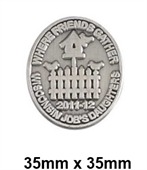
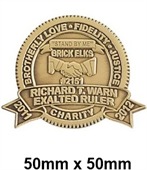
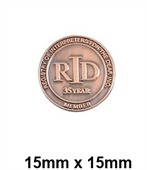
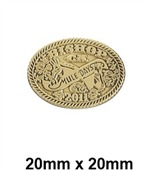
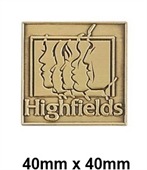
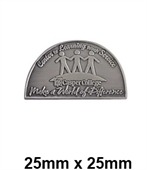
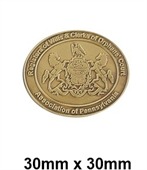
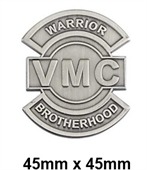
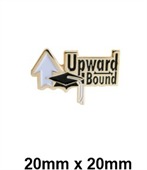
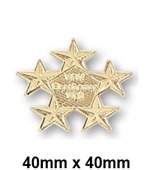
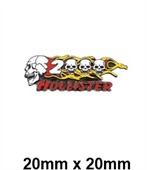
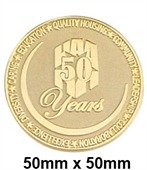
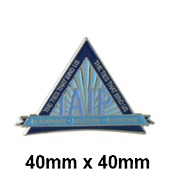
Where a soft enamel pin uses colour fill to decorate the design, a die struck antique pin uses metal contrast. The die strikes the artwork into the metal, creating raised and recessed areas across the surface. An antique wash in brass, silver, copper, or gold covers the whole pin surface, darkening into the recesses. Hand polishing then returns the raised areas to a lighter tone of the same metal, producing the two-tone contrast that defines the antique look. The result is a colourless pin where the design reads through depth and light rather than through paint. Sizes run from 15mm to 50mm, and all four finishes are available across the full size range. Gold plating carries an additional cost; brass, silver, and copper are standard.
The finish choice changes how the pin reads on the lapel, and it's worth deciding early in the design process. A brass finish gives a warm, aged tone suited to heritage organisations and clubs. Silver reads cleaner and suits corporate and formal award contexts. Copper sits between the two and works well for boutique or artisan brands where the metal's warmth complements the design.
Gold finish is available where the distinction of a gold-toned pin matters, including military-style awards and organisations with existing gold regalia. The additional plating cost reflects the extra process step required beyond the standard finishes.
Worth Knowing
How does the two-tone effect work on a die struck antique pin?
The antique wash settles into the recessed areas across the whole pin surface, then hand polishing removes it from the raised areas, returning them to a lighter tone of the metal. The contrast between the dark recesses and the polished raised areas is what gives the antique finish its depth and aged appearance.
Is there a difference in cost between the four antique finishes?
Brass, silver, and copper are available at standard cost across the full size range, while gold plating carries an additional cost because the plating process involves an extra production step. The gold pricing should be confirmed at the quoting stage if that finish is preferred.
What size works best for a die struck antique pin?
Smaller sizes from 15mm to 25mm suit standard lapel wear where the pin sits without dominating. Larger sizes from 35mm to 50mm suit chest medals and ceremonial pins where the design detail needs more surface area to read clearly.
Can a club crest or detailed logo work as a die struck antique design?
Crests and logos with strong line detail and clear relief areas work well because the two-tone finish makes the raised elements stand out distinctly. Designs with very fine detail or large flat areas may show less contrast, so checking a proof against the specific artwork before committing to production is worthwhile.