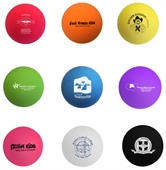
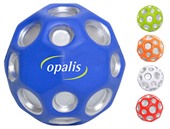
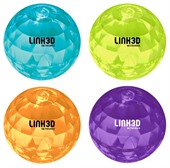
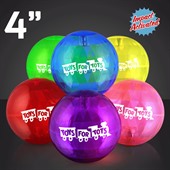
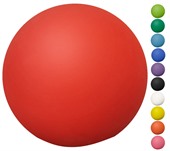
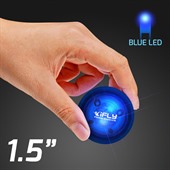
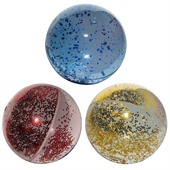
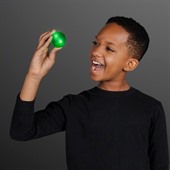
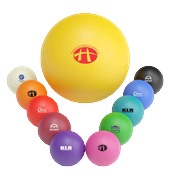
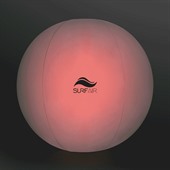
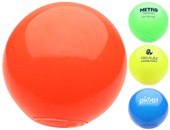
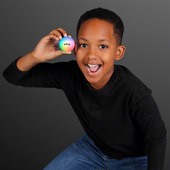
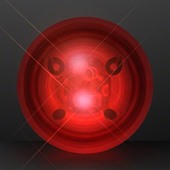
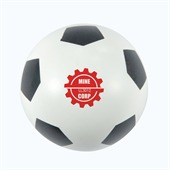
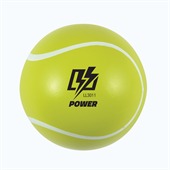
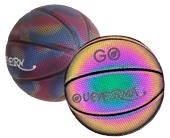
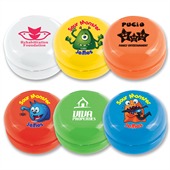
Pad printing applies the logo to the rubber or PU surface of the ball on a circular print area, typically 25 to 30mm in diameter, positioned on the top or bottom face. The surface curves, so artwork needs to be simplified. A bold logo or clean single-colour mark reads well at that scale; fine detail and gradients don't transfer cleanly. The logo moves with the ball every time it's thrown or bounced, which is different from a static branded item that only generates impressions when someone looks at it. The range covers standard rubber and PU hi-bounce balls for school sport and event giveaways, as well as LED and light-up styles that activate on impact and suit evening events where visual attention in low light is the goal.
Printed bouncing balls handed to children at a school sports day travel home with them, get used in the backyard, taken to a friend's house, and bounced at the school gate the next morning. Each use is a brand impression that extends well beyond the initial event handout, and the physical movement of play means the logo reaches more people than the child who first received it.
Two best-seller styles in the range are available on a 24-hour and 3-day express service, making them the relevant choice when event timelines are tight or a last-minute order is needed.
Good to Know
What is the print method for bouncing balls?
Pad printing is the standard method used across the range, which transfers ink from a raised pad onto the curved rubber surface of the ball. The print sits on the surface and holds well through regular play, though artwork should be kept clean and simple to read clearly on the circular print area.
How many colours can the logo be printed in?
Pad printing suits one or two colours for the clearest result, with a single bold colour giving the sharpest impression at the 25 to 30mm print area. Logos with complex gradients or fine lines should be simplified before artwork approval to reproduce clearly on the curved surface.
What branding position does the logo appear in?
The print area sits on the top or bottom face of the ball, which is the flattest and most printable section of the curved surface. The logo is visible when the ball rests on a surface, and in the air depending on how the ball is oriented when thrown or bounced.
Can bouncing balls be used as show bag fillers?
The standard rubber hi-bounce styles are compact and lightweight, making them a natural fit for show bags and children's party bags where a low-cost, high-play-value item rounds out the contents. Children tend to pull them out and use them immediately rather than leaving them in the bag.